Maybe It's You, Not Dinner: Parenting Style & Picky Eating
You may think your child’s eating habits are all about the food—but your parenting style might be doing more of the driving.
Why It Matters
When it comes to raising competent eaters, food is only part of the story. The tone you set, the expectations you carry, and the way you respond to your child’s behavior all shape their relationship with food. Understanding how your parenting style shows up at mealtime can help you shift away from power struggles and toward trust, connection, and autonomy.
The Hidden Driver at the Table
Most of us spend a lot of time thinking about what to feed our kids: more veggies, less sugar, fewer snacks, better protein. But the how - how we approach meals, how we talk to our kids, how we respond when they say “I don’t like this" - matters just as much.
Sometimes, the real tension at the table isn’t about the broccoli. It’s about control, fear, pressure, or frustration. And often, those feelings are rooted in our parenting style.
A Quick Look at Parenting Styles
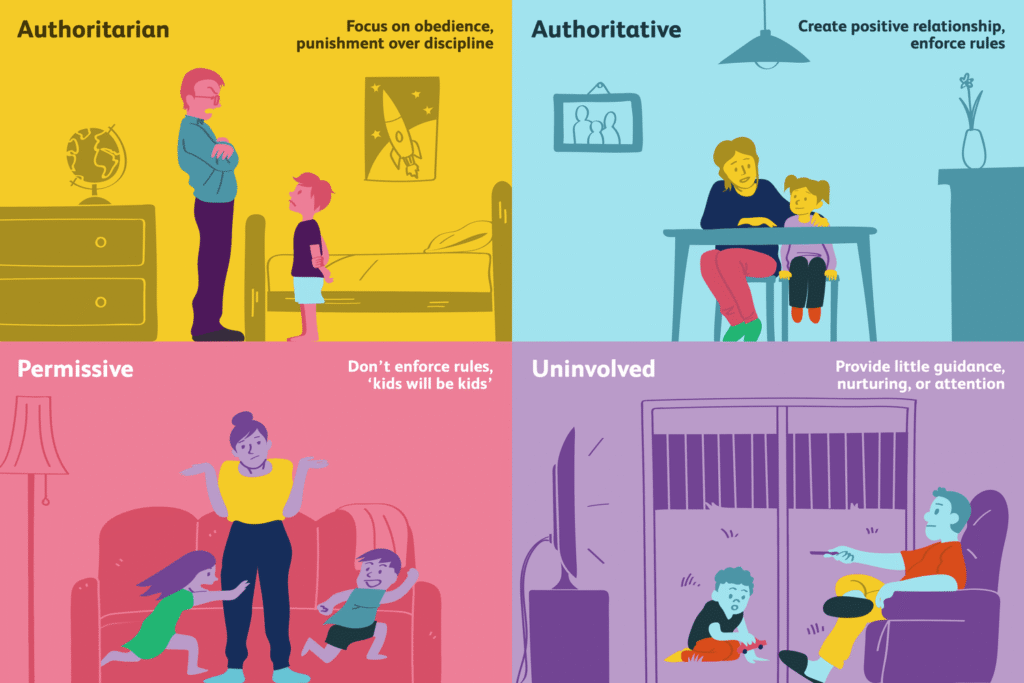
Researchers have long identified four main parenting styles:
Authoritarian: high control, low warmth. “You’ll eat it because I said so.”
Permissive: high warmth, low control. “You don’t want to eat? That’s fine. Want a cookie instead?”
Neglectful: low warmth, low control. (This one’s less common in intentional feeding.)
Authoritative: high warmth, high structure. “Here’s what’s for dinner. I know you may not love it yet, but your body needs real food.”
When applied to food, these styles show up in subtle (and not-so-subtle) ways.
What This Looks Like With Food
Authoritarian feeding might sound like: “You can’t leave the table until your plate is clean.”
Permissive feeding might sound like: “Okay, you don’t want this? I’ll make mac and cheese.”
Authoritative feeding sounds like: “You don’t have to eat it, but this is what’s for dinner. We’ll try again next time.”
In all of these, the food hasn’t changed. But the tone, expectations, and relationship have.
From Control to Collaboration
If your meals feel like battles, it might be time to pause and ask: Am I trying to control the outcome… or support the process?
Your job isn’t to get your child to eat five bites of broccoli tonight.
Your job is to create a space where they can learn to like broccoli over time—without fear, shame, or bribery.
That shift, from control to collaboration, is the sweet spot of the authoritative feeding style.
A Small Shift to Try This Week
You don’t need to overhaul your whole parenting approach.
Try this:
Instead of saying, “You have to eat your dinner before you can have dessert,”
Say, “Dessert is part of the meal tonight. You don’t have to eat everything, but let’s all come to the table and eat together.”
It sends a very different message: That you trust your child. That you’re not using food as a reward or punishment. That meals are about more than just what goes in their mouth.
(You could share how this shift landed in your house—maybe the first time you stopped bribing with dessert or let your child decide how much to eat.)
Final Thought
It’s easy to think the solution to picky eating is just a better recipe. But sometimes, it’s a better relationship.
The 5 Mealtime Rules I Do Have
I don’t have many food rules at our family table—but I do have expectations. And they’re not negotiable.
Why It Matters
Family meals aren’t just about what’s on the plate. They’re an opportunity to practice respect, responsibility, and the kinds of life skills our kids will carry into the world ... into friendships, workplaces, relationships. These habits might not show up in a nutrition textbook, but they matter just the same.
The 5 Mealtime Expectations in Our House
1. Chew With Your Mouth Closed
I can’t overstate how much this matters to me. Loud chewing is my #1 pet peeve. I’ve gently corrected it since my kids were toddlers. Not because I’m obsessed with manners for manners' sake, but because I truly cannot focus when I hear it. I also think it’s a small kindness to teach our kids how to eat in a way that doesn’t distract or disturb those around them.
Related: scraping teeth on utensils. Just… no. Please use your lips. Blow on your food. Learn the temperature with your mouth. My kids know this is a hill I’m willing to die on.
2. Use Your Knife. Eat Small Bites.
This one is courtesy of my husband, and I fully support it. We’re raising kids who will one day eat dinner with colleagues, friends’ parents, maybe even future in-laws. Spearing an entire chicken thigh and gnawing at it isn’t a good look. So yes, we teach our kids how to cut food into bite-sized pieces, and we provide the tools to do it.
3. Know How to Set a Table
Not a 14-piece formal setting, but the basics: fork on the left, knife and spoon on the right. Napkin, plate, water glass. It's not about being fancy it’s about contributing to the meal. My personal trick? I used to say “the knife protects the spoon,” but apparently I had it backwards. Doesn’t really matter. The habit stuck.
4. No Hats at the Table
Yes, it’s old-school. No, I don’t care. This is one of those small signs of respect that just feels right in our house. It's another small sign of respect - We’re here to talk, connect, and share a meal. I want to see your beautiful eyes while we do.
And yes, this most often applies to just my husband and son, but occasionally the girls and I wear hats too and the rule is the same (no matter how bad our hair looks!).
5. Help Clear the Table
If someone cooked for you, you help clean up. Full stop. This has been the rule since my kids were little, even if it meant a few broken dishes along the way. Now that they’re older, they’re expected to load the dishwasher, put away leftovers, and wipe the table too. We all pitch in, because that’s how we show respect for each other’s time and effort.
Final Thought
These aren’t punishments. In my mind, they’re really important life skills and lessons in respect and shared responsibility. And honestly? I hope my kids’ future roommates think I’m a parenting wizard when they see them clear the table without being asked.
I am going to go out on a limb this week and talk about something that may or may not generate some thoughts and feelings from you listeners and watchers out there. ⁓ If you've been reading anything I put out for a little while, you'll know that I don't have a lot of rules around eating and meal time.
Specifically, I've never required that our kids have a "no thank you" bite, or that they have to try something of the food that's put on the table, and I don't require that they clean their plates {before dessert}.
I don't have rules like that when it comes to mealtime. But I was thinking about it this weekend and I do have a lot of expectations around meal time and things that I want my kids to learn.
And I thought I would talk about five of those sort of key, what I'm going to call expectations for my kids around family meals.
We do eat most of our dinners, especially, as a family. And actually, almost exclusively, it's family dinners that we eat together. Breakfast is kind of a free, is a free for all. It's not kind of a free for all. It is. It is every man for himself or herself. And lunch, you know, at school and work, obviously we're doing our own thing. And even on the weekends, it's rare that I put together an actual lunch, especially now that my kids are older.
So dinner is the time when we sit down together. And there are some expectations that I and my husband have for our kids.
Number one, absolutely without a doubt, hands down, top of the list, I expect my kids to chew with their mouths closed. And I realized that this is way more about me than it is about them. Chewing with your mouth open is my number one pet peeve. If you ask my kids, "what is it that bugs your mom?" They will tell you "chewing with your mouth open!"
Ever since I, when I remember being 10, a teenager and getting mad at my brothers (sorry brothers!) for chewing with their mouths open. It drives me crazy. It is a sound that I like, once I hear it, I can't un-hear it. And then it is the only thing that I can focus on. And again, I recognize that this is more about me than it is about anybody else, but I want my kids to - I think they can - chew with their mouths closed. And if there are other people out in the world like me for whom that sound is so incredibly distracting, I just think, you know, I can teach my kids to do that. I know that there are some cultures where, for example, slurping,
food or soup, is a sign of respect. And I can respect that. In my house, that's not the case. And so I have from day one with my kids, ⁓ found ways to gently encourage them to eat with their mouths closed. Take it or leave it. That is number one paramount important for me.
And related to this, although separate, but I'm not putting it as number two. This is still related to number one. It is using your teeth to take food off of silverware What is that about? You know if it's too hot blow on it like a normal person and your lips give you great information about the temperature of your food and if it's a Salad, you don't need to use your teeth. You can use your lips. So anyway using teeth To scrape food off of silverware also drives me crazy and when I hear my kids do it
I absolutely do correct it gently, patiently as much as possible, but I do correct it. So number one, chewing with their mouths open.
Number two, and this one really stems more from my husband, although I happen to agree with it, but it drives him crazy, especially when he sees our kids doing it, which is the thing that I do is teach my kids to cut their food and eat small pieces of it rather than simply spearing it. And then like, biting off of it ...
The number of times, especially our son, God love him, he's 13, he will just spear an entire huge something and just want to eat pieces of it off the fork rather than using his knife to cut it into reasonably bite-sized pieces. So we do encourage our kids, we provide all of the utensils needed and we help encourage them to learn how to use their utensils properly. I feel like someday this is going to serve them really well. They're going to go to dinner with
you know, their boss or their partner's parents or something where it might matter that they look like they can cut their their food, you know, like they've been raised to know how to use utensils. So we gently and patiently encourage them to cut their food before they eat it.
Number three: And again, as I just suggested, we provide all of the necessary utensils for them to do so - I want them to know how to properly set the table. And I don't mean like a full, you know, 25 piece place setting for, for every individual, but to know where the fork and knife and spoon and water cup and plate go when they set the table.
Again, I think it is a simple, ⁓ it is a simple thing that I can teach them that someday might serve them well.
I discovered something in preparing for this. I always thought it was fork on the left side and then the spoon and the knife. And I always told myself the knife protects the spoon. So the spoon is closest to the plate. The knife protects the spoon facing in protecting the spoon and the fork stayed in bed. Well, I was wrong. So
Lesson learned, fork on a napkin on the left side of the plate, and then the knife, and then the spoon. The idea being you place utensils, of course, in the order in which you will need them. And when people used to do this, we never do in our house, there was a soup course before the main meal, so you needed your soup spoon first. So maybe it's fine that I have taught my kids the wrong way to set a place, but I want them to know how to do
All right. ⁓ Number four: This also is a rule that stems from my husband and I agree. And it is probably something that is old and outdated and someone is going to call me out on it. But still it is a rule we have a behavior we encourage in our house. And that is simply no hats at the dinner table. I want to see everybody's beautiful faces. And usually, yes, this tends to apply to my husband and son who are the ones that generally are wearing hats. Try as I might to bring back, you know, hats for women. I've been told that that time has passed. And so it's usually my husband and son who have to take their hats off. But anybody who is wearing a hat, hats off at the dinner table. And again, I feel like this is just, ⁓ it's just good practice. And it's a sign of respect for the people around you. We are going to engage in conversation now and you can see me.
I'm sure all of these are things that are going to send my kids to therapy later in life. I'm just accepting that and moving on.
Okay. Number five,
Number five, this is another big one for me. I really feel very strongly about this. I have big opinions about this and you might think I'm judging you if you decide that you don't do this in your house and I may or may not be, but number five, I expect my kids to help clear the table when meal time is over. We tend to also have the expectation in our house that whoever cooked does not need to be a part of helping to clean up all of the dishes. But generally we're all pitching in.
And from the time that my kids were little, I have expected that they help us clear the table. My husband and I both work, we share in cooking responsibility. Generally, most often it's me that's cooking, but my husband does a fair amount of cooking as well.
And our kids, yes, they have school, they have work that they are doing that is their work. But I have spent time, my husband has spent time preparing a meal for you. And you can respect that effort, even if you hated the meal, by helping us clear the dishes. As they've gotten older, they also are expected to put them into the dishwasher. They're expected to help put away any leftovers that we are keeping to do a full sweep of the kitchen and the dining table.
to clean up from a meal. I fully expect them to participate in that. And I know someone is going to ask me, "seriously, when they were little, even when they were little, you had them do this, didn't they break dishes?" 110 % dishes have been broken, but not just by my kids, also by me. I mean, I have broken dishes, taking them out of the dishwasher and hitting them on the side of the countertop. You know, for me,
It has been more important that I teach my kids that they are going to be a part of this process of meal time. than I have been so precious about the dishes that I have. You know, we just have plain white porcelain dishes that can easily be replaced. I don't care as much about that as I do about getting my kids to participate. And again, I feel like this is a small thing I can teach my kids. They are going to go to a friend's house someday. And when dinner is over, I hope they will clear their plate.
And those parents, my kids, friends, parents are going to think that I have worked parenting magic on them. What did you do? He cleared his plate after dinner. my God. So I hope that that happens. I also hope that as they go out into the world as adults and have roommates or go off to college or have a partner, you know, and roommates beyond that they…
recognize and respect the effort that someone has put into serving them food and that they participate in helping to clean up. And again, a lot of this comes from me. For me, I don't feel relaxed until the kitchen is clean. In our old house and our current house, the kitchen, the dining room and the living room are all one giant space. We spend so much time in it. And when that is a mess, I don't feel relaxed. So some of that again is on me, but I really do appreciate that everyone is pitching in.
and I think it is a sign of respect and judge me all you want for requiring my kids to participate, but it is very important for me.
All right, that's what I've got for you this week. I would love to know what you require or hope for your kids. What are you teaching them? What kinds of expectations do you have around mealtime? I would love to hear them. All right, see you next time.
Do You Really Know What’s In Your Kids’ Foods?
Several studies released this week are shining a light on what’s actually in the foods and products we give our kids every day.
And while each one focuses on a different issue—chemical exposure, food dyes, processed meats—they’re connected by growing evidence that what children eat and interact with daily can have meaningful, cumulative effects on their health.
Let’s unpack what’s new, what’s worth paying attention to, and where we can go from here.
Why It Matters
These studies are part of a larger trend: more research is confirming that many common exposures—things we might not even think twice about—could be influencing kids’ development, metabolism, behavior, and long-term health risks.
That doesn’t mean panic. But it does mean it’s worth paying attention to the patterns.
Chemical Exposure in Toddlers
A recent study found 96 different chemicals in toddlers’ bodies. Some of these come from pesticides or pollution—but many are from plastics, personal care products, and packaging materials.
Small shifts to consider
Swap vinyl bath toys for silicone or rubber
Use fragrance-free soaps and lotions
Store leftovers in glass instead of plastic
Food Dyes in Everyday Foods
Artificial dyes like Red 40 and Yellow 6 are still used in many U.S. products, even though they’ve been restricted elsewhere due to possible links to behavioral and immune effects.
And they’re not just in candy—they show up in breads, yogurts, boxed snacks, and more.
Not sure where to begin?
Read labels for: Red 40, Yellow 5/6, Blue 1 - anything with a COLOR + NUMBER Seek natural alternatives: turmeric, beet powder, freeze-dried berries
Processed Meats and Chronic Disease Risk
Another study linked just 50g of processed meat a day—about one hot dog—to an 11% increase in diabetes risk and 7% increase in colorectal cancer risk.
Again, this isn’t about swearing off cookouts. It’s about noticing patterns and creating more variety over time.
Easy Alternativesto Processed Meats
Rotisserie chicken
Tuna in olive oil
Hummus + veggie wraps
Lentil patties or hard-boiled eggs
The Bigger Picture
A 17-year national study found worsening trends in nearly every area of kids’ health—from obesity and mental health to early mortality.
We can’t solve this alone. But we can control the environments we create at home—what we bring in, what we normalize, and how we talk about food and health.
What You Can Do
Here’s a simple roadmap:
Pick one place to start—maybe snacks, maybe lunch meat
Look for "better" not "perfect"
Talk with your kids about what you’re doing and why
Celebrate even the smallest shift
Share what you learn—it helps normalize the conversation
You don’t need to overhaul everything. You just need to start where you are—and keep moving forward, one choice at a time.
Can't watch right now? Just listen!
Full Transcript
Hi everyone, Dr. Kiyah here. I wanna talk today about something that has been showing up in the headlines and likely it's showing up in your home too.
Several studies came out this week covering everything from food dyes and chemical exposure to the health risks of consuming processed meats.
And they are connected by a thread of growing evidence that is demonstrating that what kids eat and what we eat and interact with daily, everything from what's going into our lunchboxes to what's happening at bath time, can have meaningful cumulative effects on our bodies. So let's break down this week what we're learning and where that leaves us as parents who want to do right by our kids without losing our sanity in the process. Let's start by talking about what's going on. So here is a quick summary of what's new.
A study found 96 different chemicals in the urine of toddlers. Another linked even small daily amounts of processed meat to higher risk of chronic disease. And those artificial food dyes you hear about, they are still present in one in every five packaged foods, often in places you might not expect. So if you've ever paused while packing a lunch and wondered, is this okay? You're not imagining it. The stakes are high.
The news is though that we are not powerless and while these headlines can feel overwhelming, they also give us a very clear place to focus, which is that small adjustments we make over time can support our kids' health in the long term.
Parents have always been worried about food and food safety. What seems to have changed in the last couple of decades is the sheer volume of ultra-processed options and that those multiple exposures stack up over time. Because we're not just dealing with one sugary snack or one hot dog. We are talking about dozens of small exposures every day, often from birth, that create a cumulative load on the body.
So let's start with that first study about chemical exposure. In this study, researchers detected nearly 100 different chemicals in young children, everything from phthalates to parabens, pesticides to flame retardants. And these exposures, they report, are not just coming from food. They are showing up in everyday products, things like sippy cups, soaps and lotions, bath toys, cleaning supplies. ⁓
packages that we keep foods in. Kids are more vulnerable to these compounds because of their size, their metabolism, and the fact that their bodies are still developing. But that doesn't mean we need to panic.
But it does suggest that even small changes, like choosing unscented products, like avoiding microwaving plastics, or switching from plastic to silicone, that these can make a difference over time. So for example, your toddler's lunch might include deli meat and plastic baggies, a squeezable pouch, a fruit pouch, a bottle of water, perhaps it sat in the car and warmed up overnight. If you're doing this, you might be serving up a handful of unintentional additions.
Now that doesn't mean that the lunch is bad. It does mean that it's worth looking at it and thinking about it carefully so that you can start to make some swaps if possible. Okay.
Let's talk about the latest research on artificial dyes. So red number three was recently banned if you saw that in the headlines, but others like red 40 and yellow six, these are still widely used in the US food supply. They're most common in candy and snacks. Yes, that's for sure. But they also show up in unexpected places and places you might not be looking for them. Yogurt, boxed macaroni and cheese, crackers, even some breads and buns. Although these have been deemed safe by the FDA, some studies have
linked these dyes to hyperactivity, to immune concerns, and to cellular stress. And while more research is always helpful, many countries, including those in the EU, have moved to limit or restrict their use. If this feels like new territory for you and you're thinking, a minute, how do I even know if this is in my food? All you have to do is look at the label. Anything that has a color plus a number. Red 40, blue 1, yellow 5. That's an artificial dye.
And finally, a third major study this week linked regular intake of processed meat, like hot dogs and deli slices, to increased risk of type two diabetes and colorectal cancer. And what surprised me most about this was how low the threshold for intake was, just 50 grams a day. That's about the equivalent of a single hot dog.
That doesn't mean that you or your kid can never eat a hot dog again. It is worth thinking, however, about how often these foods are showing up in your diet and where you may be able to offer alternatives some of the time.
Personally, this came up for me just last weekend at a family cookout. There were hot dogs, burgers, chips, juice pouches, fruit juice pouches, and all of the buns came in plastic. And I had that moment we've all had. What do I do? Do I get different food for my kid? Do I mention the study I just read? Do I say nothing? In the end, I decided not to say anything at that time because one barbecue is not the problem.
But if we were eating like that three or four times a week or building lunch boxes entirely from these foods, then yeah, I might be thinking more carefully about it because the risk becomes bigger. And look, this is not about perfection. It's about staying aware of the patterns that exist in your own life and in your own family. Because stepping back from this, these aren't one-off concerns. A long-term study tracking child health in the US found many indicators, obesity, chronic disease, mental health, are all moving in the wrong direction.
our kids are less healthy than they used to be. And that feels discouraging, I get it. But I also see it as a call to action, especially for those of us who care about raising resilient and healthy kids, which I think is why you're here. When we focus on the environments we can control, our homes, our routines, the way we talk about food and health with our kids, we create a buffer. We're not putting them in a bubble, but we're buffering them and that matters. So.
You're thinking, where do I start? Here are five ideas. Pick one area to reassess. Maybe it's lunch meat, maybe it's plastic storage, maybe it's reading snack labels. Number two, don't aim for all or nothing. Aim for a little bit better most of the time. Number three, involve your kids in this process. I talk about this all the time. Read the labels with them. Experiment with colorful foods. Talk about why you're making changes. Bring them in. Number four, stay curious about yourself and others. And number five, share what you learned with a friend, with a partner, with your community.
with the school, not coming from a place of judgment but simply wanting to share what you've learned for others who may also want to make changes in their habits too. Because this is how change happens. It's not overnight but it is meal by meal, habit by habit, conversation by conversation. And in the end this isn't just about reducing risk, it's really about reinforcing our values like caring about our health, paying attention to how things are made, and practicing thoughtful intentional decision making.
When we treat food and health as a long game, not a list of rules, we help our kids build trust in us and in their own ability to make good choices that serve them well over time. If these studies feel like just one more thing that you have to worry about, I get it. It's not my intention to make you feel that way.
I believe that they're useful because they help shed light on places where we can take action and that's where your power lives. Not in being in complete control, but making intentional decisions. Thanks for being here, for thinking critically and caring deeply. That effort that you're making, it really does matter. I'll see you next time.
Could Discount Bans Curb Our Junk Food Habits?
What if your grocery store stopped tempting you with BOGOs on chips and soda?
Why It Matters
Scotland is set to ban multi-buy promotions on foods high in sugar, salt, and saturated fat - everything from candy bars to soft drinks - in a sweeping public-health move aimed at cutting rates of obesity and diabetes.
For parents, it raises an uncomfortable but important question: Are those “buy one, get one free” deals really helping us feed our families better, or are they just making unhealthy eating harder to resist?
What Is Scotland Doing?
Let’s get the facts straight:
By the end of 2026, Scotland plans to ban price promotions (like “two for one,” “three for the price of two,” or free refills) on foods that are high in fat, sugar, or salt. That means products like chips, candy, soft drinks, and even some baked goods.
Their goal? Cut down on how much junk food families buy. And hopefully, as a result, reduce the rates of diabetes, obesity, and other related chronic health problems.
The Scottish government sees this as a public-health win. Research shows price promotions do drive higher purchases of unhealthy products, even if people wouldn’t have chosen them otherwise.
Why Do These Deals Matter So Much?
Let’s be honest: most of us love a deal. And if you’re shopping for a family on a budget, those “buy one, get one” offers can feel like a blessing.
But food marketers know exactly what they’re doing. These deals:
Encourage you to buy more than you planned
Make high-sugar, high-salt foods cheaper per serving
Crowd out healthier foods in your grocery cart
For kids, this means more exposure (and let’s face it, more nagging) to continue to buy, and eat, these packaged, ultra-processed foods. And for parents, it means spending money on foods that don’t necessarily fuel your family in a meaningful way.
Could This Happen in the U.S.?
It’s a fair question. Americans face the same marketing tactics, often even more aggressively. Walk into any big-box grocery store, and you’ll see end-caps stacked with soda, cookies, and salty snacks on deep discounts.
Would a ban on junk-food promos work here? It’s complicated. We value choice and freedom in the U.S., and food companies would fight hard against it. But the core problem — that price shapes our choices — is the same.
One idea: instead of an outright ban, what if we incentivized healthy foods with the same level of marketing muscle? Imagine “buy one, get one” on apples, carrots, or plain yogurt.
How Families Can Outsmart the Deals
Look, promotions aren’t going away anytime soon. So here’s how you can work around them:
Make a list ... and stick to it! If it’s not on the list, pause before adding it to your cart. Shop with a budget for treats. If you want to take advantage of a snack deal, fine. But set a limit. Talk to kids about marketing. Explain how deals work and why those foods seem more appealing. Shop the perimeter first. Load up on fresh produce, proteins, and whole grains before hitting the processed aisles. Look at unit price, not just sale price. That “deal” might not be so great if it leaves you buying food you don’t really want.
Want even more tips and easy swaps? Grab this Smart Shopping Guide, absolutely free.
You can also learn about the 8 most common mistakes we make while grocery shopping (and how to avoid them!)
Final Takeaway
Scotland’s move is bold — and it might not translate directly to the U.S.
But it does force us to think: If promotions are making it harder for us to stick to healthy habits, how can we protect ourselves — and our kids — from being steered toward foods we don’t actually want?
In the end, no one’s banning you from buying chips or soda. But if we can be more mindful about how marketing shapes our choices, we might find a better balance — and a healthier grocery cart.
Can't watch right now? Just listen!
How to Choose Better Breakfast Cereals
The cereal box might look the same — but what’s inside has quietly changed.
Why It Matters
Cereal is a pantry staple in most households, especially with kids.
It’s quick, it’s cheap, and it feels like an easy win. But a new study found that between 2010 and 2023, many children’s cereals got higher in fat, sodium, and sugar, while losing key nutrients like fiber and protein.
That means what we think of as a healthy, kid-friendly breakfast may be missing the mark more than ever.
What’s Changed in the Cereal Bowl?
A study published in JAMA [1] analyzed 331 cereals across 13 years.
Here’s what they found:
Added sugar increased by 10.9%
Fat went up 33.6%
Sodium rose 32.1%
Meanwhile, protein and fiber both decreased
The worst part? These changes weren’t obvious on the front of the box.
Packaging still promotes “whole grains” and “fortified with vitamins,” but the actual nutrition label tells a different story (if you slow down long enough to read it).
Why This Keeps Happening
There are a few reasons cereal quality is slipping:
Brand loyalty is strong. We assume the cereal we ate as kids is still a decent choice.
Marketing claims distract from the nutrition facts. Stickers shout “gluten free” or “non-GMO,” but those don’t mean much for sugar or fiber.
Food companies quietly reformulate to save costs, improve shelf life, or follow trends (like removing artificial dyes but increasing sugar to keep the taste).
Most of us aren’t checking the ingredients every time we shop — and manufacturers know that.
What to Watch For on the Label
You don’t have to give up cereal. But here’s how to shop smarter:
Look at fiber first: Aim for at least 3g per serving. Check sugar: Less than 8–9g per serving is a good benchmark (if you can get below 6g, you're shopping like a rock star!) Watch protein: Pair low-protein cereals with nuts, seeds, milk, or yogurt to boost nutritional power. Ignore the front of the box: Flip it over and **read the label and nutrition panel**. That's where the information, not marketing, lives.
For me: I also look at the ingredient list. I'll choose a cereal with fewer ingredients even if it has slightly less protein or an extra gram of sugar. (Just my preferences.)
Better Breakfast Doesn’t Have to Be Fancy
If cereal’s not doing the job - or not keeping your kid full - or you're interested in trying something other than cereal occasionally, try some of these ideas. They're not as fast as cereal, but they certainly won't require you spend an extra hour in the kitchen each morning either.
Smoothies with spinach, banana, milk, and chia seeds
Mini breakfast burritos with eggs and veggies
Again, these don’t take much longer than pouring cereal, and they often keep kids (and adults) satisfied for hours.
Final Takeaway
This isn’t about fear or shame. It’s about awareness.
If cereal is part of your morning routine — great. Just make sure it’s doing what you think it’s doing. And when possible, use breakfast as an opportunity to get in protein, fiber, and flavor that sets your kids (and you) up for the day.
Because what we eat in the morning doesn’t just fill our stomachs, it sets the tone for everything that comes after.
References
[1] Zhao S, et al. Nutritional Content of Ready-to-Eat Breakfast Cereals Marketed to Children. JAMA Network Open, Published Online: May 21, 2025. 2025;8;(5):e2511699. doi:10.1001/jamanetworkopen.2025.11699. Accessed June 30, 2025: https://jamanetwork.com/journals/jamanetworkopen/fullarticle/2834355
Can't watch right now? Just listen!
Full Transcript
If you're like me, you might give your kids cereal in the morning, thinking that it is a decent option for breakfast. I had it as a kid. I'm pretty healthy. It must be a great choice for my kids too. But some new research examining more than 300 brands of cereal suggests a different story.
So let's talk about something that's probably sitting in your pantry right now, just like mine, breakfast cereal. For a lot of us, cereal is the go-to breakfast meal. It's quick, it's easy, and it's something that my kids will actually eat. It's one of those foods that feels like a safe bet, especially if it says things like fortified with vitamins or whole grain right on the front of the box. But here's the thing.
that cereal that you grew up with, that cereal that you loved as a kid, it's not the same one that your kids are eating today. In fact, it seems like it may have gotten a little sneakier.
So a new study published in Public Health Nutrition looked at 331 breakfast cereals between 2010 and 2023. Researchers wanted to know how has the nutritional quality of these cereals, especially those that are being marketed to children, changed over the past decade? And the answer that they found? Not for the better.
So here is what they found specifically. Fat content increased by 34%, 33.6. Sodium went up 32%. Added sugars rose almost 11%. Meanwhile, fiber and protein went down.
That means that the average bowl of cereal today, again, especially those colorful cartoon-covered boxes that are right at eye level for those kids who are sitting in shopping carts, has more of the things we're trying to limit, salt, fat, and sugar, and less of the things that help us feel full and nourished, like protein and fiber. So while the front of the box might still say made with whole grains or good source of vitamin D, the actual contents?
they're looking a little bit more like dessert than they are like breakfast.
Why does this matter? I am not here to demonize cereal. Never am I here to demonize a food. I have three kids. Most mornings, cereal is the breakfast of choice in my house. At least for those kids who I can actually get to still eat breakfast.
But this study is a reminder of how quietly our food system shifts beneath us and how easy it is to keep doing things that we've always done without realizing that the thing we're reaching for, the thing we're choosing has changed. Because breakfast isn't just the first meal of the day. It really does set the nutritional tone for the whole day. And if your kids are starting off with a high sugar, low fiber bowl of air,
It can impact their focus, their energy, their mood, and their hunger all morning long. And this goes for you too. It's not just your kids. If cereal is a staple in your house, it's worth making sure that it is earning a spot on your shelf by providing something of value.
So how did we get here to these changes in cereal? Let's talk about a few things. Number one, brand loyalty runs deep. A lot of us are still buying the cereal that we ate as kids. Maybe it's Cheerios, maybe it's Cinnamon Toast Crunch or Captain Crunch or Froot Loops. Maybe it's a store brand version of something similar.
And because the box still looks familiar, we don't really question what's inside. But formulations change. And most brands aren't going to announce, hey, we added more sugar and fat to this on the front of the package.
Number two, health halos distract us.
So food packaging is a marketing game. Brands have seconds to get your attention and convince you to buy their product over the dozens of others that are in the aisle. Cereal boxes, all packaging really, love to shout things like made with whole grains, non-GMO, no artificial colors or sweeteners. And while those claims might be true, they distract us from the stuff that actually matters. How much sugar, how much fiber, and what kinds of fats are inside
and what other ingredients are being used to make that food.
Number three, reformulations fly under the radar. Sometimes companies change their recipes to save money. Other times they follow food trends. And those might even be in our favor, say removing artificial dyes or palm oil due to consumer demands. And as consumers, you know, we're busy. We're shopping with toddlers in the cart. We're moving fast. We trust the brand. We trust the box. And sometimes, not always, that trust can get exploited.
So what should you look for on the label? Let's pause for a second here and talk about strategy. If you're standing in the cereal aisle and overwhelmed by the hundreds of options and you're three hungry kids shopping with you, here's what I want you to check. Fiber first. Look for at least three grams of fiber per serving. Fiber helps you stay full longer and it supports digestion. ⁓
Sugar second. Try to aim for under eight or nine grams of serving, six if you can. And keep in mind that those serving sizes are small and most people pour way more than a serving size. So make sure to check serving size while checking sugar.
Number three, protein matters. If the cereal itself is low in protein, it with something that has a little bit more. Milk, yogurt, add some nuts or seeds or even a hard boiled egg on the side.
Number 4, Ignore the front of the box. Seriously, flip it over. That's where the real information lives. And yes, I am that person you will see standing in the aisle reading the ingredient list and the nutrition panel. Don't be ashamed of it. Own it.
So if you are now rethinking your entire breakfast strategy or just wondering, well, what can we eat that is fast and still works for us? Here are a few simple realistic options that work in our house and likely many others.
We sometimes will make overnight oats. You mix oats, milk, fruit, and nut butter. The night before, store it in the fridge. Someone could even be mixing this up while the rest of you are clearing up from dinner. Scrambled eggs and toast with a little bit of fruit comes together in less than 10 minutes. A yogurt parfait, plain Greek yogurt, granola, and some berries. In our house, I also add a drizzle of yogurt because why not?
Smoothies pair with frozen fruit, spinach and milk or yogurt, and chia or flax seeds. Just remember, smoothies made with a bunch of sweetened yogurt along with dairy milk and or fruit juice, and or filled exclusively with fruit, contain a lot of sugar. So make sure that there's some additional fiber and protein in there as well.
like scrambled eggs, mini breakfast burritos, scrambled eggs, cheese, some veggies, and a tortilla. These can even be made and frozen and then warmed up ahead of time.
even something as simple as whole grain toast with nut butter and banana slices. And look, even if cereal stays in your breakfast rotation, which is totally fine, by the way, think of it like a base and not a whole meal. Add some fruit, add some nuts, something to give it a little staying power.
There's something else that I think about a lot. How do I talk to my kids about this? You know, if your kid loves their sweet cereal and you don't need to take it away overnight, if your kid loves their sweet cereal, don't take it away overnight. And don't take it away without talking to them about it. I really do encourage you to talk to your kids about changes you're making, not just making these changes without telling them.
And if you're not sure what to do, start small. Mix in half of their usual cereal with a higher fiber, a higher protein, or lower sugar one. At the grocery store, let them help you choose. Give them a few options that you're okay with them bringing home and let them pick. Talk to them about how food makes you feel and how it makes them feel. You could say, hey, have you noticed that you're hungrier on mornings that you have X? Because I certainly have.
and model variety. Let them see you making thoughtful swaps without guilt and without drama. Remember, the goal is not to create good and bad cereals. It's to help kids, to help all of us learn that some choices keep us full and focused longer and that we are allowed to make changes in our decisions when we learn something new. I know it's hard not to feel overwhelmed by all of this. Wait, cereal is bad now too?
That's not what I'm saying. What I am saying is that our food environment is always changing. And so if we're eating the way we always have without checking in and updating our knowledge with new knowledge as we get it, we might be missing things that matter. Not necessarily, but maybe. And it's worth being informed. ⁓
cereal is fine. It's a fine choice for you and for your kids in the morning. It's convenient. It's nostalgic. And it is an easy on-ramp to breakfast for a lot of families. But if it's less nutritious than it used to be, we can be a little bit more intentional about how we choose it, how we use it, and what we serve it with.
So again, to be sure you hear me, I am not here to tell you to throw out every box of cereal in your house. Food is far too expensive to suggest that. Definitely enjoy what you have in the pantry. But the next time you go to restock your cereal boxes, maybe you pay a little bit more attention. Because while the packaging might not have changed, what's inside the box seems to have.
This new study is a little reminder, not to panic, but to pause, to read the label and to ask, is this food doing what I think it is doing? And if not, what could we swap in that gets us a little closer to feeling nourished, focused, and full? Thanks for being here, and I'll see you next time.
The Truth About “Healthy” Sweeteners
Just because it’s sugar-free doesn’t mean it’s harmless.
Why It Matters
Two new studies are raising red flags about popular sugar substitutes. - One links diet sodas with higher risk of type 2 diabetes. - The other suggests erythritol, a sugar alcohol common in keto snacks and protein bars, might increase risk for stroke and heart problems.
For anyone trying to eat “healthier,” that’s frustrating. But it’s also a wake-up call.
What’s the Real Risk?
Let’s break it down:
A long-term study published in The American Journal of Clinical Nutrition followed over 100,000 people and found that drinking diet sodas with artificial sweeteners like aspartame and sucralose was linked to a higher chance of developing type 2 diabetes. [1]
In a separate study, researchers found that erythritol—a sugar alcohol used in many “no sugar” products—may promote blood clots and impair blood vessel function. That’s a big deal when we’re talking about stroke risk. [2]
What do both of these have in common? They’re used in products marketed as “healthy,” “sugar-free,” “zero calorie,” or “keto-friendly.”
The Problem Isn’t Just the Ingredients
Here’s the thing: it’s not just the chemical composition of these sweeteners that’s a concern.
It’s the way we eat them:
We overdo it. One diet soda becomes three a day. One protein bar turns into a crutch for skipping real meals.
We rely on them. Artificial sweeteners are everywhere—breakfast cereals, salad dressings, yogurts, gum—and they often replace nutrient-rich options.
We trust the label too much. “Sugar-free” sounds safe. But many of these products aren’t nourishing. They’re just empty, engineered versions of the real thing.
What to Do Instead
I'm not here to advocate that you can't use sugar-free or artificially sweetened products EVER or that you need to throw out everything in your pantry.
I'm here to advocate that we think about getting back to the basics:
Eat whole foods as often as possible — fruits, veggies, nuts, whole grains, legumes, lean proteins (including from plants and occasionally animals).
Choose naturally sweet foods (berries, apples, dates) over sweetened snacks.
Use less, not none. If you love sweetener in your coffee, fine — just don’t build your whole diet around it.
Balance your plate: protein + fat + fiber + flavor = satisfaction.
And most importantly, zoom out.
Don’t let a snack label or trending ingredient steer the whole ship.
Eat real (whole) food. Mostly plants. Not too much.
- Michael Pollan
Final Takeaway
Sweeteners can be helpful tools. But they shouldn’t be the foundation.
If you’re aiming for better health, focus on variety, quality, and consistency — not hacks, not gimmicks, and not the next “zero calorie” miracle. Those rarely, if ever, work. Especially in the long-run.
Whole, mostly unprocessed foods in sensible portions … While it may be the most boring, it's also the most effective nutrition advice you’ll ever hear.
[2] Berry AR, Ruzzene ST, Ostrander EI, et al. The non-nutritive sweetener erythritol adversely affects brain microvascular endothelial cell function, J App Phisol. 16 JUN 2025, https://doi.org/10.1152/japplphysiol.00276.2025
How to Get Your Post‑Op Nutrition Back on Track
One week after venous thoracic outlet syndrome surgery, I had no appetite, no energy, and definitely no desire to follow the beautifully thought-out recovery plan I created weeks in advance. Here's what happened—and what I'm doing now to get back on track.
Why It Matters
Good nutrition isn’t just a checkbox. It’s fuel; especially when your body’s trying to repair itself, protein, vitamins, and minerals are the building blocks of healing. But if you can’t eat (or simply don’t feel like it) the plan doesn’t matter. Sharing this isn’t pity, it’s permission to be human: recovering doesn’t follow a schedule, but we can still find ways to reboot our nutrition. Bite by bite.
I Had a Plan. A Great One.
Before surgery, I did everything I could to prepare for recovery. I knew I was going to be staying at my parents' house in Maine, away from my usual routine in Virginia. I planned a detailed, personalized post-op recovery strategy, broken down into categories like sleep, hydration, movement, and of course, nutrition.
In my pre-op notes, I outlined:
High-protein meals and snacks at every eating occasion
Specific supplements: Vitamin C, Vitamin A, magnesium, zinc, collagen
A plan to eat colorful fruits and veggies to support immune function
A backup list of easy, protein-packed meals like egg muffins, smoothies, stir fries, and soups
I even used ChatGPT to help generate 25+ simple, high-protein breakfast, lunch, and dinner ideas that didn’t require much prep. On paper, it looked solid. It felt empowering. I thought: "I've got this."
I’m now one week post-op from having my first rib removed (first rib resection and scalenectomy), and here’s what actually happened:
I have no appetite. None. My stomach basically RSVP’d "not attending."
When I do eat, I can only tolerate a few bites before I feel done.
I have no energy to prepare food. Like, not even to reheat something.
And honestly? I feel guilty asking for help, even though I’m surrounded by people who are more than willing.
Dinners have been the only consistent meals, with all thanks going to my family. But breakfast and lunch? Nonexistent. I haven’t eaten most of what I planned. And despite knowing exactly what I need to support healing, I'm just not doing it.
It’s humbling. And frustrating. And totally normal.
So Now What?
This week, I’m recommitting. Not to the whole plan, not to perfection. I'm recommitting to doing something that will make a difference. Here’s what that looks like:
1. Ask for Help First up: I’m asking my mom (or one of my kids) to help me make some egg cups. They’re small, protein-packed, and can be eaten hot or cold. No utensils needed. One small ask = multiple ready-to-go breakfasts.
2. Prep a Smoothie Station I’m keeping frozen fruit and Greek yogurt stocked and ready for smoothies. They’re easy to drink, which is sometimes all I can manage.
3. Nut Butter for the Win When I can’t stomach a meal, I’ll have a spoonful of almond or peanut butter. It’s calorie-dense, has protein and healthy fat, and doesn’t require cooking.
4. Say Yes to Convenience Foods Protein-enhanced snack bars like Rx Bars, Greek yogurt cups, or pudding with protein powder added? Yes. These don’t require help or energy, and they can live in a drawer by the bed.
5. Drink More Water I’ve also been slacking on hydration. So I'm moving a water bottle to wherever I am during the day. No more excuses.
Micro Goals That Matter
I’m not trying to nail three perfect meals a day. My only goal this week is to eat one protein-rich meal or snack before dinner. That’s it. Maybe a smoothie. Maybe Greek yogurt. Maybe egg cups.
It doesn’t have to be fancy, but it does have to happen. Because healing takes protein, vitamins, fluids—and consistency. A little progress each day is still progress.
Why I’m Sharing This
If you're caring for someone post-surgery, or preparing for a procedure yourself, know this: Even the best plans will meet reality. That doesn’t make them worthless. It just means they need adjusting.
You can check out the full list of post-op meals and recovery nutrition strategies on my blog. (Link below.) And if you have questions about thoracic outlet syndrome or what helped me get diagnosed, I’m happy to share.
This isn’t about getting it all right. It’s about being kind to yourself while your body does the hard work of healing. Let’s fuel it as best we can.
Until next time, Kiyah
When Your Kid Eats Junk All Day Then Skips Dinner
They want to skip dinner after cupcakes, Cheetos, and cotton candy at camp. Should you worry?
Why It Matters
Summer throws structure out the window. With parties, camps, ice cream trucks, and late nights, many parents panic when their kids graze all day and then skip dinner. But what looks like “bad eating” is often just a normal shift in appetite. Knowing how to respond—without pressure or panic—can help your kids stay tuned in to their bodies and develop a lifelong healthy relationship with food.
They Skipped Dinner… Again
It’s 6:30pm. You’re setting the table with a well-balanced meal. Meanwhile, your kid is still riding the sugar high from a cupcake, three gummy snacks, and a popsicle from camp. They sit down, take one look at the food, and say: “I’m not hungry.”
You feel your stomach drop.
Should I make them eat? Should I be worried?
Let’s talk about what’s really going on here.
Zoom Out: One Day Isn’t Everything
It’s tempting to view every skipped meal as a crisis. But eating isn’t something that balances out daily—it balances out over time. Kids’ appetites naturally ebb and flow, especially during summer when days are hotter, more active, and less predictable.
Instead of asking, Did they eat a good dinner today? Try asking: Have they eaten a variety of foods across the week?
If nutritional intake were graded on a curve, summer would be a group project where the popsicles do most of the talking.
Appetite Swings Are Normal
Kids’ hunger cues are affected by a lot:
Sugar highs and crashes
Heat (suppressing appetite)
Physical activity levels
Growth spurts
Sleep quality
Emotions and overstimulation
Skipping dinner doesn’t automatically mean something’s wrong. It means their body may not be asking for more food right now.
What You Can Do Instead of Panicking
Offer dinner without pressure. Let them know it’s there. No guilt trip. No bribing.
Keep a predictable routine. Even if they skip a meal, keeping mealtimes steady helps maintain structure.
Normalize ups and downs. Say something like: “Looks like you’re not too hungry tonight. That’s okay.”
Avoid the bedtime snack trap. If they routinely skip dinner and ask for snacks 30 minutes later, you may need to revisit structure and timing.
Don’t Let One Off Day Define You (or Them)
Summer isn’t about perfection—it’s about flexibility.
And remember, you’re not failing because your kid skipped the quinoa bowl you made. You’re parenting in real life, not on Pinterest.
(Honestly, you deserve a trophy just for attempting a quinoa bowl in July!)
Let the Week Tell the Story
If your child eats mostly balanced meals throughout the week, gets enough sleep, stays hydrated, and has energy to play—that’s a win. A skipped dinner after a junk-food-filled day isn’t a disaster. It’s data. And data tells us when to intervene… and when to just breathe.
The Bottom Line
Kids can skip dinner. It’s not a failure—it’s part of being responsive to their bodies. So serve the meal. Make it pleasant. And trust them to come to the table when their body says it's time.
Protein-Packed Foods that are Actually Worth Buying
Protein is more than a buzzword — it’s a building block for energy, fullness, and keeping your family fed without the sugar crash. But you don't need protein-added (highly processed) foods to get enough.
Why It Matters:
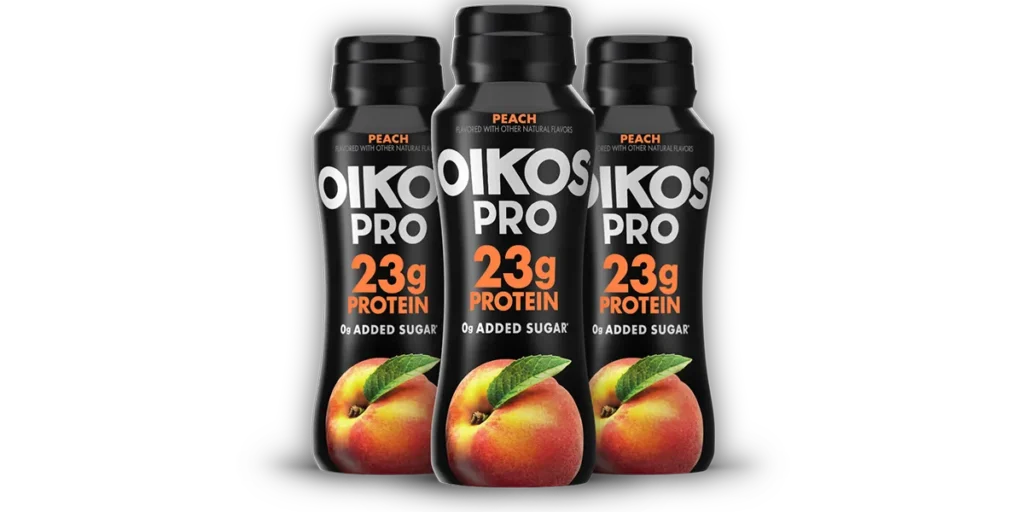
New launches like Danone’s protein shake line are tapping into what parents already feel: we want food that’s fast and fuels our families well. But not all “high-protein” products are created equal.
This post breaks down what protein actually does, how to spot products that work, and what to feed your family when life’s too busy for meal prep.
The Protein Push Is Everywhere
If you’ve noticed more high-protein yogurts, cereals, and snack bars in your grocery store, you’re not imagining it. Brands like Danone are jumping into the protein shake market, reflecting a growing demand for quick, high-protein options — especially for busy families.
But here's the thing: the presence of protein on the label doesn’t always mean the product is worth it. The real question isn’t just “Is it high in protein?”, it’s “Is this helping my family feel full, nourished, and energized in a realistic way?”
Let’s break it down.
What Protein Does in the Body
Protein plays a critical role in keeping both kids and adults functioning well.
It supports:
Muscle growth and repair: Kids need this as they grow. Adults need it to recover from exercise and prevent muscle loss with age.
Energy regulation: Protein digests slower than carbohydrates, giving the body a steady supply of energy instead of sharp spikes and crashes.
Tissue repair and immune function: Proteins are used to build enzymes, hormones, and immune system components. Without enough, your body struggles to maintain basic processes.
Fullness and appetite control: Eating enough protein helps reduce the urge to graze mindlessly or reach for quick sugar fixes.
Most families get a big hit of protein at dinner, but skimp earlier in the day which can lead to low energy, poor focus, and hanger (we’ve all been there).
Processed vs. Real-Food Protein Picks
It makes sense that shelf-stable shakes and bars are appealing. You’re trying to get out the door with a kid who’s only eaten a strawberry and a bite of toast, or you’re stuck between meetings without time to cook.
These options can be helpful, but they’re not the only ones. And they’re often more processed, more expensive, and not necessarily more effective.
Instead, try these real-food convenience options you can keep stocked at home:
Greek yogurt or skyr – high protein and easy to flavor naturally
Hard-boiled eggs – cook a dozen for the week
Tuna or salmon packets – add to salads, wraps, or crackers
Rotisserie chicken – quick base for sandwiches, tacos, grain bowls
Edamame – frozen, microwavable, and kid-approved
Nut butters – paired with apples, toast, or crackers
Hummus – with veggies, pretzels, or pita
Cottage cheese – top with fruit, tomatoes, or hot sauce
Roasted chickpeas – shelf-stable with a satisfying crunch
Lentils – toss into pasta, quesadillas, or soups
These foods give you the protein boost your family needs, without depending entirely on packaged products.
My go-to "I'm in a rush and my initial plan has totally backfired (or I ran out of time)" meal is rotisserie chicken with raw veggies and pre-cooked, microwavable rice
How to Read Labels Without Losing Your Mind
Here’s where it gets overwhelming: the label.
Front-of-pack claims are designed to sell, not to educate. “High protein” might mean compared to their low-protein version, not that the product is truly nutrient-dense.
To keep it simple, use this framework:
Protein
Aim for 10g+ in snacks, 15–25g for meals
If it’s labeled “high protein” and doesn’t meet those minimums — skip it
Sugar
Keep it under 6g per serving when possible
Carefully read labels for things like yogurts and bars; they often a ton of added sugar
Fiber
Look for 3g+ per serving
Protein + fiber = better blood sugar control and fullness
Ingredients
I try to stick to foods with short, recognizable lists as often as possible
Chemistry set-style ingredients lists don't necessarily mean avoid, but I personally try to limit those
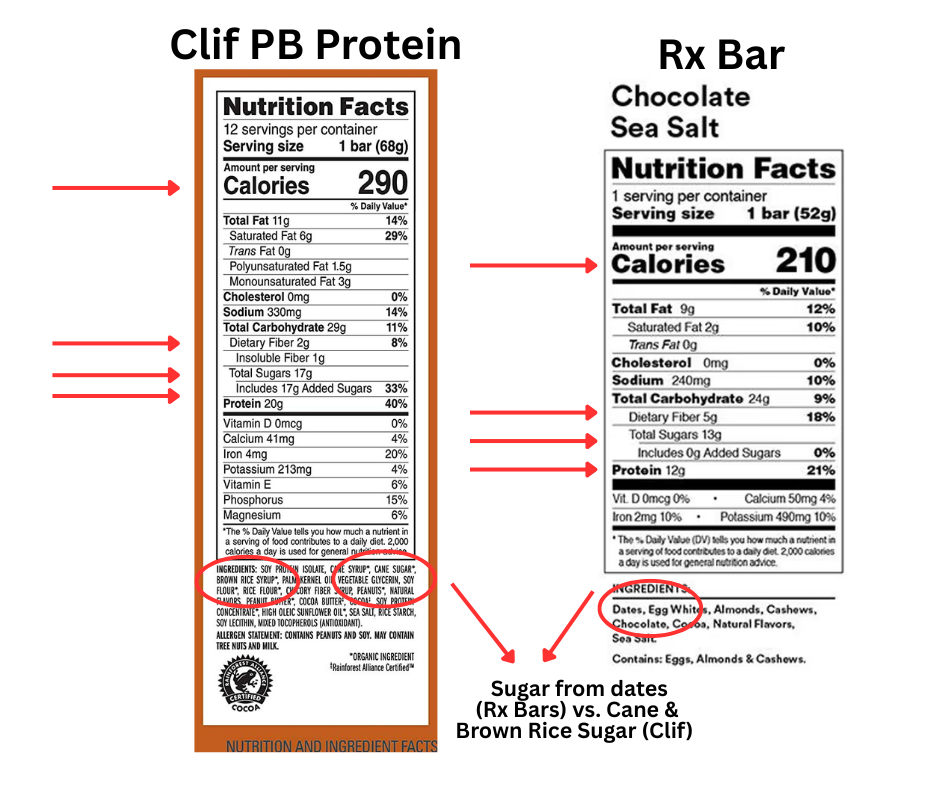
I recently switched from Clif Protein Builder Bars (Peanut Butter) to Rx (Chocolate Sea Salt) for a quick post-workout snack because they don't have added sugars (sugar is from whole fruit), more fiber, and while there is less protein it's still > 10grams.
Plan Ahead, Not Perfectly
The biggest trap we fall into as parents is thinking we need to either (1) eat perfectly, or (2) give up.
Let’s be real. Life gets messy. Someone’s sick, soccer practice runs late, and suddenly you’re debating if cereal is “dinner enough.”
Instead of falling into the cereal trap or making another drive-thru run, a little planning ahead can give you the flexibility you need.
Try stocking a few staples so you can whip up quick protein-packed meals like:
Scrambled eggs + frozen spinach + toast
Tuna salad on crackers + fruit
Quesadillas with beans, cheese, and salsa
Cottage cheese bowls with nuts and berries
Snack trays with hummus, cheese, fruit, and boiled eggs
None of these take more than 15 minutes. But they’ll keep your family fuller, longer — and you won’t be reaching for another snack in 30 minutes.
The Bottom Line
Getting enough protein doesn’t need to be, or feel, complicated.
You don’t need a perfect plan or fancy products — just a few go-to foods and a general idea of what your body (and your family) needs.
Focus on making better choices, not perfect ones. Stock what works for your life. And remember, even a simple scrambled egg dinner is doing more than you think.
Parents: Burnout Is Real - Take Control Now
Parenting comes with a never-ending to-do list—but your mental health needs to stay on it.
Why It Matters
We talk a lot about kids’ well-being, but parents’ mental health is the foundation for a thriving family. When we’re overwhelmed, anxious, or emotionally checked out, everything gets harder—mealtimes, routines, relationships.
May is Mental Health Awareness Month, which makes it the perfect time to normalize the truth: parents need support, too. Not just bubble baths or spa days, but systems, space, and sustainable strategies for feeling like ourselves again.
The Mental Load Is Crushing Us
There’s real research behind this. Moms, in particular, are often the default parent, default planner, default worrier. That invisible labor is exhausting. And when it piles up without relief, it turns into burnout, resentment, or emotional numbness.
This isn’t about blaming partners or trying to do it all better. It’s about naming what’s actually happening—so we can stop pretending it’s normal or sustainable.
MY MENTAL LOAD Despite being a 4-hour plan ride away from home, helping a friend who had a death in the family, I still found myself thinking about the activities and school tasks that our family had the following week: "Oh man. I need to plan for field day and teacher appreciation week and I need to buy two T-shirts so the kids can tie-dye in art class, and I need to sign Eleanor up for the Econ class that she's taking this summer and I need to remember to register for soccer camp ... " I couldn't shut off this inner monologue.
What "Taking Care of Yourself" Really Means
Let’s be clear: we’re not talking about bubble baths and lavender candles (unless that’s your thing). Real self-care is boring, consistent, and foundational.
It looks like:
Saying “no” to one more obligation.
Asking for help without apologizing.
Having a therapy appointment on the calendar even when things feel “fine.”
Getting sleep. Like, real sleep.
Planning for your own meals instead of eating scraps off your kid’s plate.
MY VERSION OF SELF-CARE I’ve realized that for me, self-care isn’t just about exercising: it’s about when and how I do it. I need that break between work and home, so I fit in a HIIT-style weight training session (just 30 minutes) before walking through the door at home. It’s hard enough that I can’t think about anything else - not my to-do list, not what’s waiting for me at home - just the moment I’m in. That’s my version of a spa day. Because honestly, if I were at the spa, I’d just lie there stressing about what I’m not doing.
How It Shows Up at Mealtimes
When you’re mentally tapped out, the kitchen becomes a battlefield. The food might be fine, but everything around it feels harder.
You might:
Snap when your kid complains about what’s for dinner.
Skip meals or snack constantly instead of eating real food.
Dread grocery shopping or meal prep.
Reach for takeout not out of convenience, but because you can’t think straight.
And that’s OK. It doesn’t mean you’re failing. It means you’re a human who needs support.
Small Changes That Can Make a Big Difference
We can’t always overhaul our lives—but we can start small.
Name your needs. Out loud. Even to yourself.
Lower the bar. Your kid will survive without homemade muffins.
Make one decision easier. Pre-plan breakfast for the week, or rotate three easy dinners.
Create tiny recovery windows. 10 minutes with no noise counts.
Ask for more help than feels comfortable. And then don’t micromanage how it’s done.
MY "SMALL CHANGE" I’ve stopped telling myself I’ll get work done after dinner. With a full-time job, a family, a husband who works, and a small business, it was easy to fall into the trap of “I’ll just pick this up later.” But I rarely had the energy, and I’d end up disappointed in myself. Now, I don’t set that expectation. If I do get time later and feel like working, great—it’s a bonus. But letting go of the pressure has helped me prioritize what I value most: family time and sleep. And as an entrepreneur, that’s been a tough but necessary shift.
You’re Not Alone—and You’re Not Broken
This world wasn’t built for parents to thrive. It was built for them to manage.
But we’re allowed to want more than survival. Mental health care is health care. And caring for your own well-being - gently, intentionally, and without guilt - is one of the most powerful things you can do for your family.